I'm 76. I Take No Prescription Medications. I Have No Lifestyle Diseases. Here's What I Actually Do.
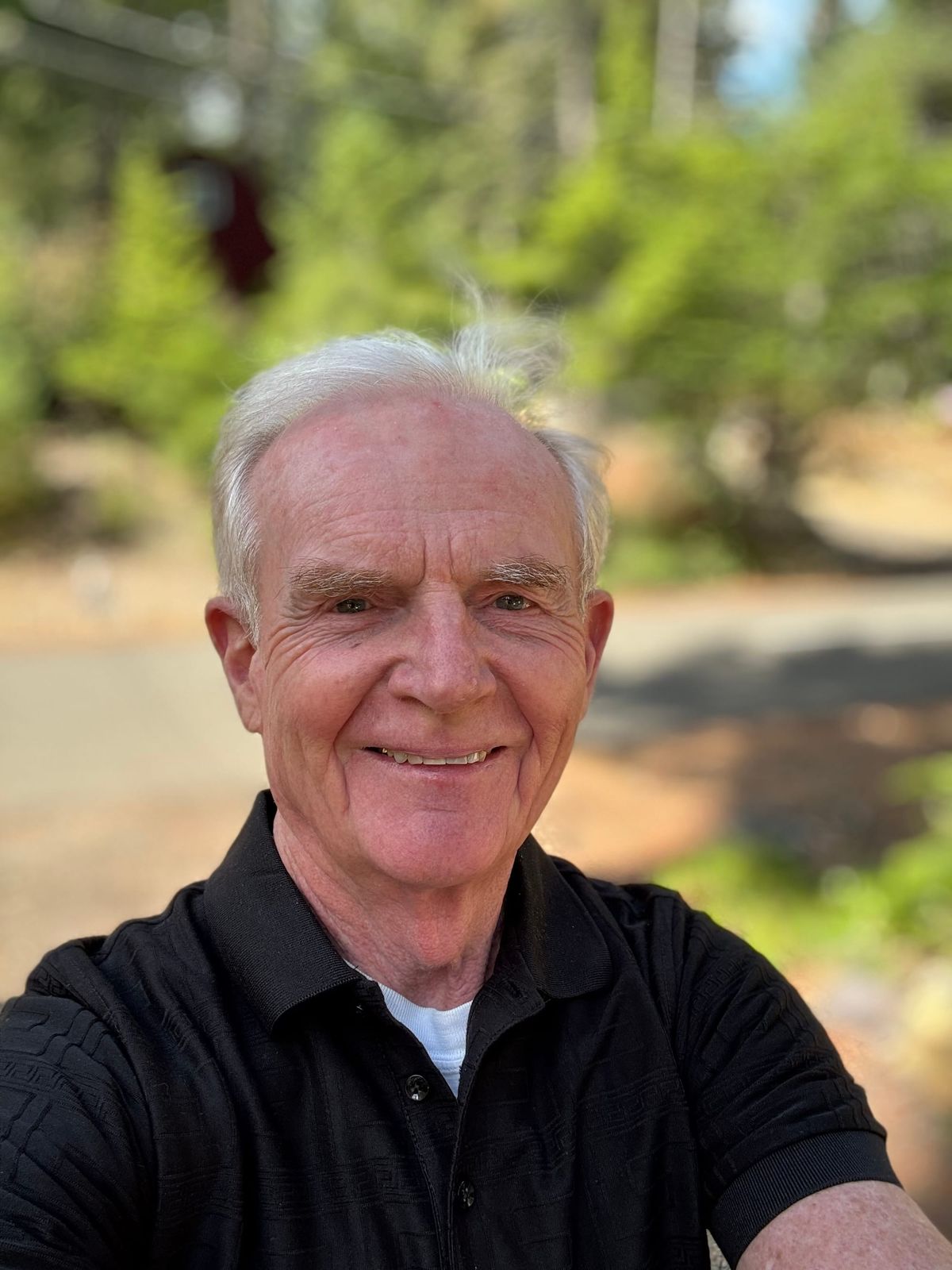
Every time I tell a doctor I'm on zero medications, I get the same look. Eyebrows up. A pause. Then: "That's remarkable."
It shouldn't be remarkable. But apparently it is. The average American over 65 is on four long-term prescription medications. I'm on none. I'm 76 years old. Earlier this year I flew to El Salvador specifically for medical tourism — a full day at Hospital Diagnostico in San Salvador. Blood work, urine analysis, fasting glucose, chest X-ray, a one-hour ultrasound by a radiologist, a stress test with a cardiologist, a respiratory evaluation with a pulmonologist, a urology consult, an ENT allergy screen, and a final hour with an internist to interpret all of it. Here are some of the numbers: fasting glucose of 87. Resting blood pressure of 103/63. Carotid artery occlusion of 12% and 8% — minimal arterial plaque, at 76. PSA of 4.07. Everything within range. No lifestyle diseases present.
Your body is capable of this too. Nobody told me that when I was 40 — which is when I wish I'd known it.
I've been interested in biology since I was six years old. My mother used to bring me along when she cleaned the office of our family doctor — a wonderful German-Jewish physician named Dr. Hamburger. While she worked, I'd wander the office and look at his equipment. This was the 1950s, before emergency rooms were a standard feature of American life. If you had an accident, if you needed stitches, if something had to be burned closed, you didn't go to a hospital — you called your doctor. Dr. Hamburger made house calls. And his office held the tools to handle whatever came through the door: a cauterization machine, suturing supplies, the full apparatus of a physician who was, in practice, the emergency room for his neighborhood. I was six years old and I thought it was the most serious place I'd ever been. When I was seven, I ordered a fish preserved in formaldehyde and dissected it on the kitchen table. Then a frog. I went pre-med in college. Washed out on organic chemistry. Never lost the interest.
What I've been doing with that interest for the past fifty years is what this site is about. I call it self-health. Not self-help. Self-help is motivational. Self-health is biological. One makes you feel better temporarily. The other changes your body's operating conditions. I've been running experiments on myself — as the willing guinea pig — for my entire adult life. This is the lab notebook, finally made readable.
Here's what a Tuesday morning looks like along Hood Canal, tucked up close under the Olympic Mountains in Washington State, where I live.
Before I open my eyes, I find my mantra. Right now it's kindness — think kindness, be kindness, be kind to myself, be kind to others. I hold that for a few breaths. Then I start moving, still lying on my back.
First, rapid pelvic releases — small, deliberate contractions, about once per second, sixty cycles. It sounds strange. It works. In physiological terms, I'm activating the distal branches of the vagus nerve — the longest cranial nerve in the body, the one that connects your brainstem to your gut, your heart, your immune response. In older language, I'm waking up the base chakra, the sacral energy center that governs vitality and groundedness. Both framings point at the same thing. I keep going until my body calls for a long, deep breath. When that happens, I know I'm actually awake.
Then my legs. I shudder them rapidly, back and forth, a controlled tremor that discharges stored tension and wakes up the fascia from the inside. There's something in this that my body has always known how to do — it may have something to do with having Tourette's syndrome, which I'll write about more later. What I can tell you is it feels remarkably good, and when I stand up, my lower body is ready.
I tap my way up: wrists, forearms, arms, across my chest, up to my face and forehead. Then down the other side. I rub my palms together until I feel the heat from friction. I hum. I sigh deeply. All of this — the tapping, the vibration in my throat, the breathing — is tuning the vagus nerve. The research on vagal activation is some of the most compelling in modern neuroscience. I've been doing most of it for forty years, mostly on instinct, before I had the science to back it up.
As my feet hit the floor, I tap my chest three times and say something small — today is going to be fine. I picked this up from Dr. BJ Fogg's work on habit formation at Stanford. Tiny, physical, honest. Then I'm up.
I go to the kitchen. There's an eight-ounce glass of water I set out the night before, now at room temperature. I drink all of it.
Then I go to the refrigerator and take out two things: lemon-flavored cod liver oil and goat kefir. Two tablespoons of the cod liver oil on an empty stomach — that's a thousand milligrams of DHA before anything else touches my system. The brain runs on this stuff. The kefir, half a cup, unsweetened, is a live-culture gut intervention I adopted years ago. A research scientist at the Institute for Systems Biology described how it had transformed his life after two major intestinal surgeries. I'll tell that story in full another time. For now: I take the kefir.
Coffee. Then the part of my morning that people find strangest when I describe it.
I put on my bathrobe and slippers and a hat, get in my car, and drive to a promontory where I have an unobstructed view of the sunrise. I roll down the window, pull a blanket over my lap, turn on Spotify, and I sit there for thirty minutes looking at the morning sky.
Here's what took me years to fully absorb: your body is not primarily a chemical machine. It runs on light. The early morning sky — specifically the UVA spectrum that's present at sunrise but not at noon — sets every timing system in your body: sleep, metabolism, hormones, immune function. The science on this is now solid. But I started doing it before I could fully explain it, because my body told me it was right. I go in a bathrobe because I don't care what I look like at six in the morning. The results are what I care about.
When I get home, I stand on my vibration plate in front of a three-foot red light panel. Ten minutes facing it from 12 inches away, then I turn around for ten more. The plate and the panel at the same time — it saves time and it seems to work better than either one alone, at least for me. On days when my sinuses are inflamed, I'll also hold my forehead about five inches from the panel for ten minutes. I know how that sounds. It works.
Then the hot tub. Twenty-five minutes, 104 degrees. There's a body of Finnish sauna research — decades of it, large studies — showing that consistent heat exposure reduces the risk of fatal cardiovascular events by up to fifty percent. I don't have a cedar sauna room. I live in Washington State and I have a hot tub. Same biology, different equipment.
Out of the hot tub, into the shower — hot, then finishing cold. I'll be honest: I'm not heroic at the cold part. What I'm aiming for is the moment when my breathing starts to run ahead of me. That's the threshold. Hit it, hold it a few seconds, and you've done something.
Then breakfast. I cook in beef tallow. Eggs. Sometimes steak. A slice of bread. Cottage cheese with blueberries, or unsweetened yogurt with blueberries — I'm aiming for thirty grams of protein in this meal. That's not a random number. Muscle loss with age — sarcopenia — is one of the most underappreciated health threats people face after fifty. You fight it with resistance and protein. Every day.
With breakfast — and this is important enough that I want to say it clearly — I take my Viome Precision Prebiotics and Probiotics. Sixty supplements in one packet, not sixty bottles. All of them calibrated to what my specific gut microbiome actually needs, based on ongoing RNA-level analysis. I've been on Viome for five years. I used to spend real money and real hours trying to manage something like this on my own. Now I don't have to. I'll write a full piece on the Viome experience and what five years of data has shown me. For now: it stays in the morning.
Before I eat, or while things are cooking, I get on the floor: thirty nonstop push-ups, or a two-minute plank, or a yoga sequence. Push-ups only every third day — I'm protecting my shoulders and elbows. I'm 76. I play a long game.
I eat one real meal in the evening, around five. During the day, minor snacks — and I mean minor.
At some point, I walk three miles.
That's Tuesday.
Here's what I want to say before I close this.
None of what I just described happened overnight. The morning routine I walked you through took years to build, and it became my normal gradually — one thing at a time, sometimes one decade at a time. I didn't wake up one Tuesday and do all of it.
So if you're reading this and feeling slightly overwhelmed: good. That's the right response. You shouldn't try to do everything I do. Pick one thing. Just one thing from this list that sounds interesting or strange or worth finding out about. Do it for two weeks. Write down how you feel — even three sentences. That's the whole method. That's what I've been doing since I was in my twenties.
This site exists because I kept getting asked some version of how are you like this at 76? and I never had a short answer. The honest answer is: fifty years of paying attention, running experiments, and adjusting. Doing it long enough that it stops feeling like discipline and starts feeling like Tuesday.
I'm not a doctor. I'm not prescribing anything for you. What I'm doing is opening the lab notebook and showing you what's in it. What I tested. What I kept. What surprised me.
I call it self-health. Not self-help. The difference matters.
This is the first page of the notebook. Next, I'll take you inside the full-day medical workup I had in El Salvador — every test, every result, every number. The cost was $595. That's not a typo, and the story is worth reading if you've ever wondered what it actually costs to know what's happening inside your body.
If you want it in your inbox when it publishes, subscribe below. One article, twice a week. No noise — just what I've learned, shown the way I learned it.
I'm not a physician and nothing here is medical advice. This is a personal record of what I've tried, measured, and found. Run anything you want to try past your own doctor first.
Tom O'Connor is the founder of 75goingon50.com. He lives along Hood Canal in Washington State .